Fungal Skin Infections in Monsoon: Why Ringworm Keeps Coming Back (and How to Finally Clear It)
HealthMemory Team · · 6 min read
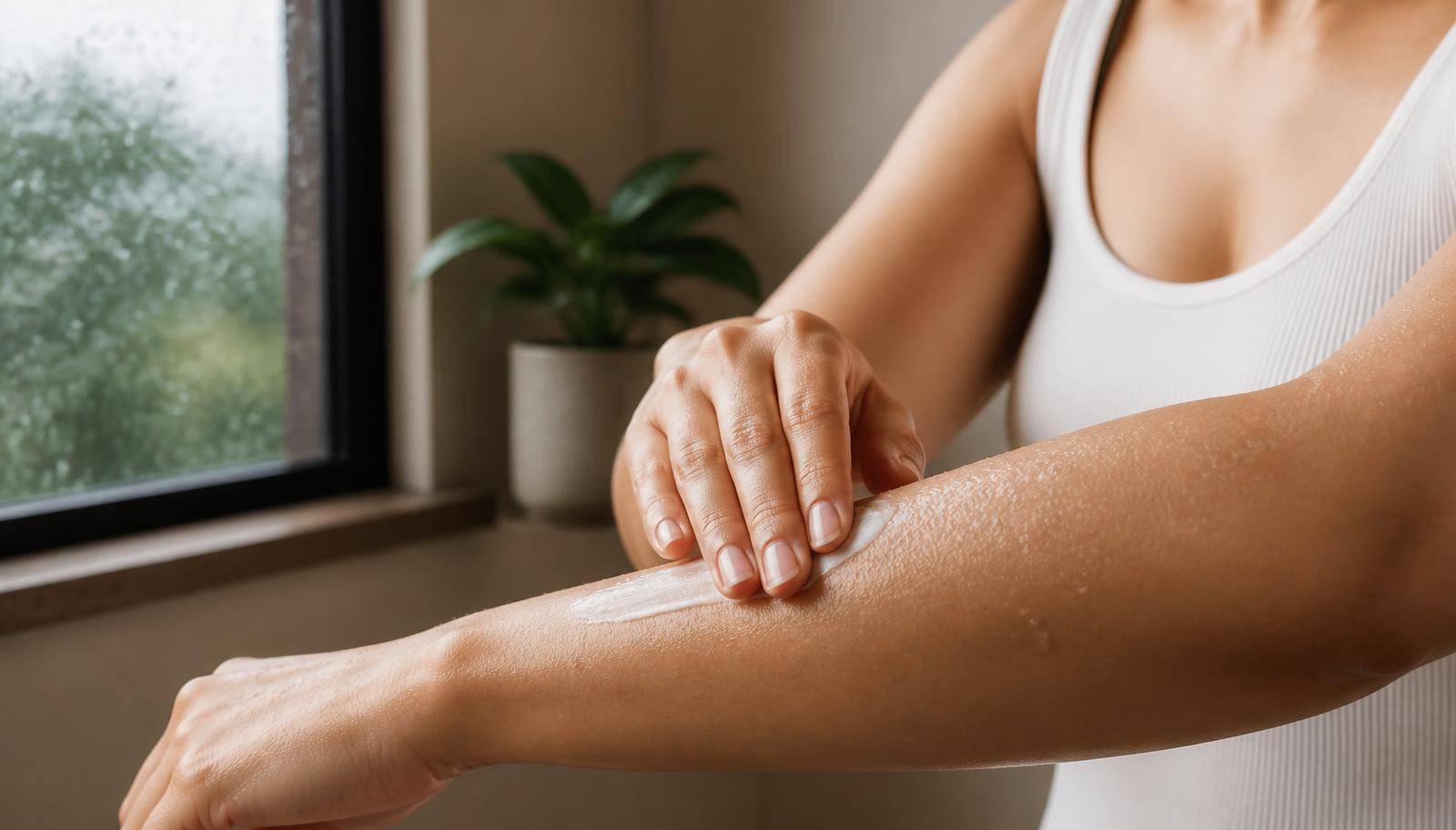
Every monsoon, dermatology clinics across India fill up with the same complaint: an itchy, spreading, ring-shaped rash that will not go away. Fungal skin infections — tinea, commonly called ringworm or daad — are one of the most common and most under-treated conditions of the Indian rainy season. They are rarely dangerous, but they are stubborn, contagious within households, and increasingly hard to clear because of how they are usually treated at home.
If you have had a patch that faded with a cream and came back three weeks later, this guide explains why that happens and what to do differently this year.
Why monsoon is peak season for fungal skin infections
Dermatophytes — the group of fungi that cause tinea — thrive in warmth, humidity and moisture. Monsoon conditions deliver all three at once:
- Sustained humidity keeps skin damp for hours, especially in body folds.
- Wet clothes, damp socks and closed shoes stay against the skin all day.
- Sweat under synthetic fabrics does not evaporate.
- Shared towels, bedsheets and floors spread spores efficiently within a family.
That is why infections cluster in the groin (tinea cruris), waistline, underarms, under the breasts, between the toes (athlete's foot) and on the trunk (tinea corporis).
What tinea actually looks like
The classic presentation is a rash that:
- is itchy, often intensely so
- looks red, brown or darker than surrounding skin depending on skin tone
- is scaly and dry at the edges
- spreads outward in a ring or arc, with a clearer centre
- has a raised, well-defined border
Not every case looks like a neat ring. On the face, neck, scalp and in people who have already used steroid creams, the border can blur and the rash can look like eczema or an allergy. The NHS guidance on ringworm notes this variability, and it is one reason self-diagnosis so often goes wrong.
Nail involvement (thick, discoloured, crumbling nails) and scalp involvement (scaly patches with hair loss) are different problems that almost always need oral medication and a doctor's assessment.
The single biggest mistake: steroid-containing creams
India has a widespread problem with over-the-counter combination creams that mix a steroid with an antifungal and sometimes an antibiotic. They are cheap, widely sold, and they work brilliantly — for about four days.
Here is what happens. The steroid suppresses inflammation, so the itch and redness settle fast. It also suppresses local immunity, so the fungus grows more freely underneath. When you stop, the rash rebounds larger, with a vaguer edge, and it is now harder to diagnose and harder to treat. Repeated over months, this pattern produces the chronic, recurrent, "steroid-modified" tinea that Indian dermatologists have been warning about for years.
The US CDC states plainly that steroid creams and ointments should not be used to treat ringworm or a rash that might be ringworm. The Indian Association of Dermatologists, Venereologists and Leprologists formed a dedicated task force on recalcitrant tinea precisely because of how common this scenario has become here.
Practical rule: if a skin cream's ingredient list includes anything ending in -sone or -solone (betamethasone, clobetasol, beclomethasone, mometasone, hydrocortisone), do not use it on a suspected fungal rash unless a doctor specifically prescribed it for you.
The second biggest mistake: stopping too early
Antifungal treatment fails far more often from under-treatment than from the wrong drug. The rash looks clear long before the fungus is gone.
The ICMR Standard Treatment Workflow for dermatophytoses emphasises treating for an adequate duration to prevent relapse, and notes that clearing an infection can take several weeks — longer where palms, soles or nails are involved, or where steroid creams were used earlier.
So: finish the full course your doctor prescribes, even when your skin looks normal. Keep applying topical treatment slightly beyond the visible edge of the rash, because the fungus extends further than you can see.
What sensible treatment looks like
This is general information, not a prescription. Antifungal choice, dose and duration must come from a qualified doctor who has looked at your skin.
Broadly:
- Limited, small patches are often managed with a plain topical antifungal (single-ingredient, not a combination cream), applied consistently for the full prescribed period.
- Extensive, recurrent or long-standing infection usually needs oral antifungal medication alongside topicals, with regular follow-up. Oral antifungals interact with several common drugs and are not suitable in every situation, including pregnancy — which is exactly why they need medical supervision rather than a pharmacy counter recommendation.
- Scalp and nail infections essentially always need oral treatment.
- Itch relief may be managed separately, without steroids.
See a doctor promptly if the rash covers a large area, involves the scalp or nails, keeps returning, has already been treated with steroid creams, is spreading despite treatment, or if you have diabetes or a condition that affects immunity.
Preventing reinfection at home
Clearing your skin is only half the job. Most recurrences are reinfections from your own environment or your family.
- Dry thoroughly after bathing, particularly the groin, underarms, under the breasts and between the toes. Pat, don't rub.
- Switch to loose cotton clothing. Tight synthetic innerwear and jeans trap sweat against exactly the areas that get infected.
- Never re-wear damp clothes. In monsoon, that includes "almost dry" innerwear off the line.
- Do not share towels, soap bars, combs or clothing. This is the single most common route of household spread.
- Wash clothes, towels and bedsheets in hot water where the fabric allows, and dry them completely — indoor drying in humid weather leaves spores alive.
- Treat the whole household together. If two or three family members have patches, treating one at a time guarantees a loop.
- Change socks daily and let shoes dry out. Alternate footwear so each pair gets a full day to dry.
- Check pets. Cats and dogs can carry dermatophytes, and a persistent household infection sometimes traces back to an animal.
Track it, or you will lose the thread
Tinea is a condition where memory genuinely changes treatment. When someone returns to a dermatologist with a stubborn rash, the questions are almost always the same: when did it start, what exactly did you apply, for how long, did it clear completely, how soon did it come back, who else at home has it.
Most people cannot answer accurately after three months of trying things. That gap matters, because the answer determines whether you need a longer topical course, a switch to oral therapy, or investigation for steroid-modified infection.
A simple record fixes this. That is the problem HealthMemory is built for — a private personal health timeline where you can log the day symptoms began, photograph the affected area over time, record every cream and tablet with its start and stop date, and note which household members were affected. When you walk into the clinic, you hand over a timeline instead of a guess.
You do not need an app to do this — a notebook works. But you do need something, because untracked treatment is the reason a two-week infection becomes a two-year one.
Key takeaways
- Monsoon humidity, damp clothing and shared linen make tinea peak in the rainy season.
- Steroid-containing combination creams give quick relief and long-term harm; avoid them on fungal rashes.
- Under-treatment causes most relapses — complete the full prescribed course.
- Scalp, nail, extensive or recurrent infections need a doctor, not a pharmacy shortcut.
- Treat the household and the environment together, not just the visible rash.
- Keep a dated record of symptoms and treatments so your doctor can see the real pattern.
References
This article is for informational and educational purposes only and is not a substitute for professional medical advice, diagnosis, or treatment.
Your health history shouldn't be scattered across papers, prescriptions and WhatsApp messages. Start building your HealthMemory.
Create Your HealthMemoryRelated articles
Preventive Health
Monsoon Stomach Infections: How to Prevent Diarrhea and Food- or Water-Borne Illness
Monsoon rain can increase everyday exposure to unsafe food and water. Learn how to reduce the risk of diarrhea, recognize dehydration, and keep a useful health record when illness strikes.
Preventive Health
Leptospirosis During Monsoon: Symptoms, Risks and How to Stay Safe
Floodwater and heavy rain can increase exposure to infections such as leptospirosis. Learn the symptoms, risk factors, prevention steps and why recording illness details matters.
Symptoms & Conditions
Dengue Symptoms: What to Watch for During Monsoon and When to Seek Medical Care
Dengue can begin like many other infections. Learn the common dengue symptoms, warning signs of severe dengue, prevention steps, and why tracking your health history matters.
Medical Records
Why Should I Create a HealthMemory Account?
Your health details are scattered across memory, prescriptions, PDFs and different providers. Here is what a HealthMemory account is, how it differs from a patient portal, and the practical reasons to keep your own organized health history.